
California Lutheran University’s Office of Undergraduate Admission has rebranded its Presidential Host program into a paid Campus Engagement Internship.
“Through conversations with Presidential Hosts, we learned that while they loved giving tours and connecting with prospective students, it was often difficult to balance with their schedules since the role was unpaid,” said Diana Hernandez, director of Undergraduate Admission, in an email interview.
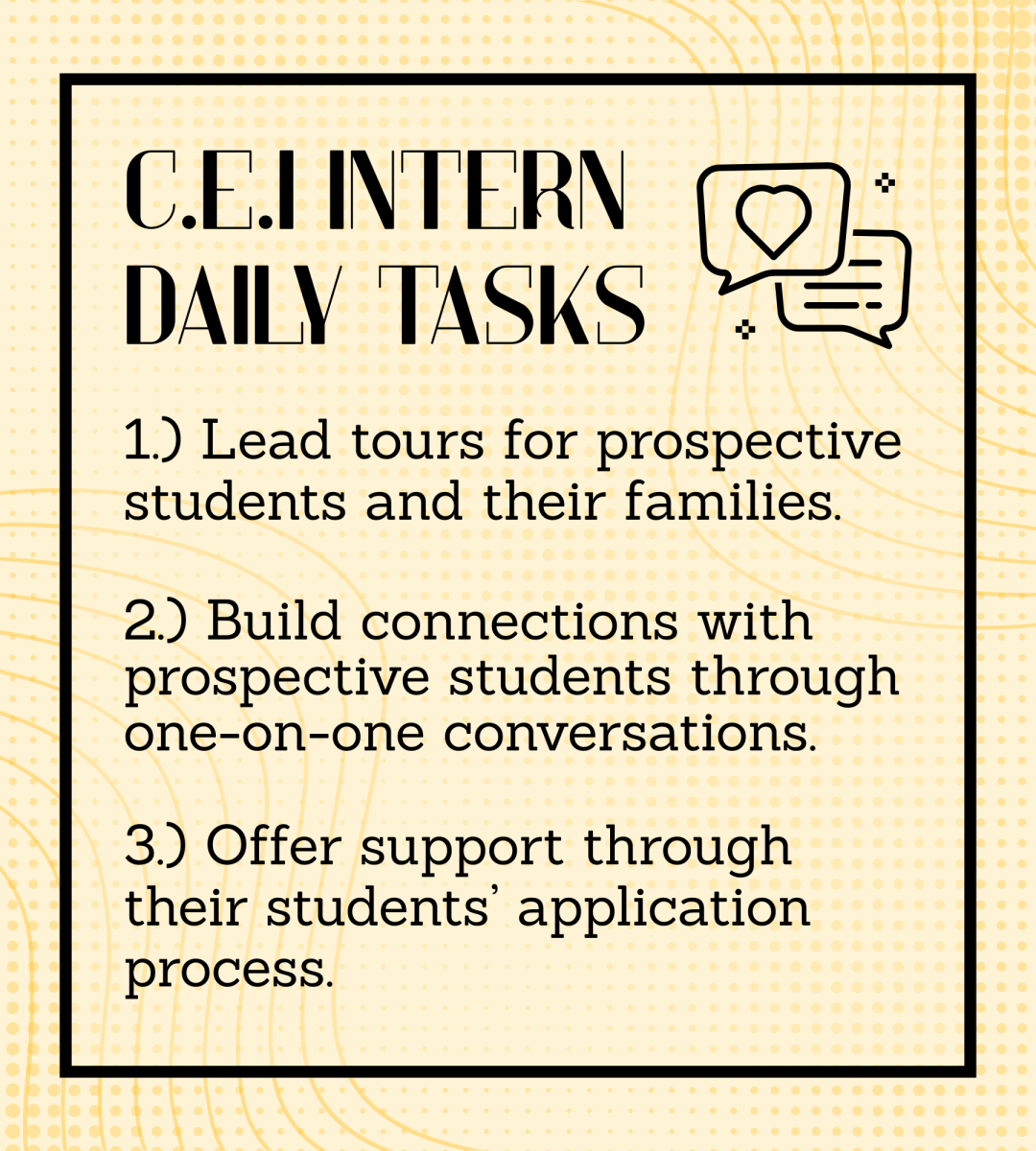
Hernandez said interns are now paid to lead tours for prospective students and their families and manage their own caseloads of future students.
“By transitioning to a paid internship model, we can recognize and support the valuable contributions our students make while also expanding their role in the admission office,” Hernandez said.
Hernandez said interns reach out, build connections and offer support throughout their students’ application process—a responsibility that was not required for Presidential Hosts in previous years.
Sophomore Ely Nesper, an intern, said the new position has similarities with the former Presidential Host program but expands on communication protocols with prospective students.
“The tours have been revamped this year. So they’re a little bit longer with more information for the students,” Nesper said. “And the new part of this program is that we are talking with students more one-on-one over, like, online rather than only in-person tours, so we’re able to build more connections with the students through an online communication.”
Campus engagement interns are also tasked with connecting prospective students with current students and staff, sophomore Hailey Hummel said.
“I sent out an email connecting one of my prospective students I’ve been talking to with some of our sports coaches here on campus so they can get a conversation going, they can start talking and they can help them with that sports aspect of things,” Hummel said.
Junior Mia Mariani said her internship pays a stipend of $2,500 at the end of the semester as opposed to hourly.
“Your time commitment dedication is three office hours, two tours a week, and then one Saturday tour once a month,” Mariani said. “But I get the first half [of the stipend] on week eight and the last half like week 16 at the end of the semester.”
Mariani said she plans to put the money toward plans to study abroad next spring.
“I like working and money,” Mariani said. “I think it’s just mainly to save and to gain experience.”
Mariani said this internship also helps her earn credit for her major.
“I have to work six hours a week to count this for two credits. So I’m working seven, so it works out perfectly. And at the end, this will subtract one of the business classes I have to take,” Mariani said.
Mariani said interns have to pass a test with their supervisors in order to give tours to families.
“[The supervisors are] making sure that we know what we’re saying at each checkpoint,” Mariani said. “For the most part, these tours are an hour and a half to two hours, depending on how long these families talk with you so that hopefully there’s no awkward silence.”
Sophomore Kaj Overlie said even though they were nominated for the position, they still had to go through a multi-step application process to become a campus engagement intern.
“There was a solo interview one-on-one with someone from the admissions office and then there was also a group interview where I was then in a room with other candidates, and we kind of had to give a presentation on our favorite movie or favorite book, so that our possible employer could learn a little bit about us,” Overlie said.
Junior Mathias Schmidt said his favorite part of being an intern is how “meaningful” and “rewarding” his work is as an out-of-state student.
“I feel a bit of an obligation to give that back to prospective students, because I tend to get paired with a lot of international students or out-of-state students, given that I’m also from out of state. So being able to give that back really feels like, very rewarding for me,” Schmidt said.
Schmidt said he appreciates the work-life balance the internship provides, saying he isn’t required to do anything outside of his required hours.
“The best part about this job is that when I’m working, I’m working, and once things are done, they’re done,” Schmidt said. “I feel that my work is very meaningful and that I was selected to do something that they felt that I was capable of.”


![“We heard [the students], and we’re going to try to offer something that still has their favorites, but also introduce something new at a point where people feel like they’re willing to pay,” Elizabeth Nepute said.](https://cluecho.com/wp-content/uploads/2026/04/IMG_9502-1200x800.jpg)