
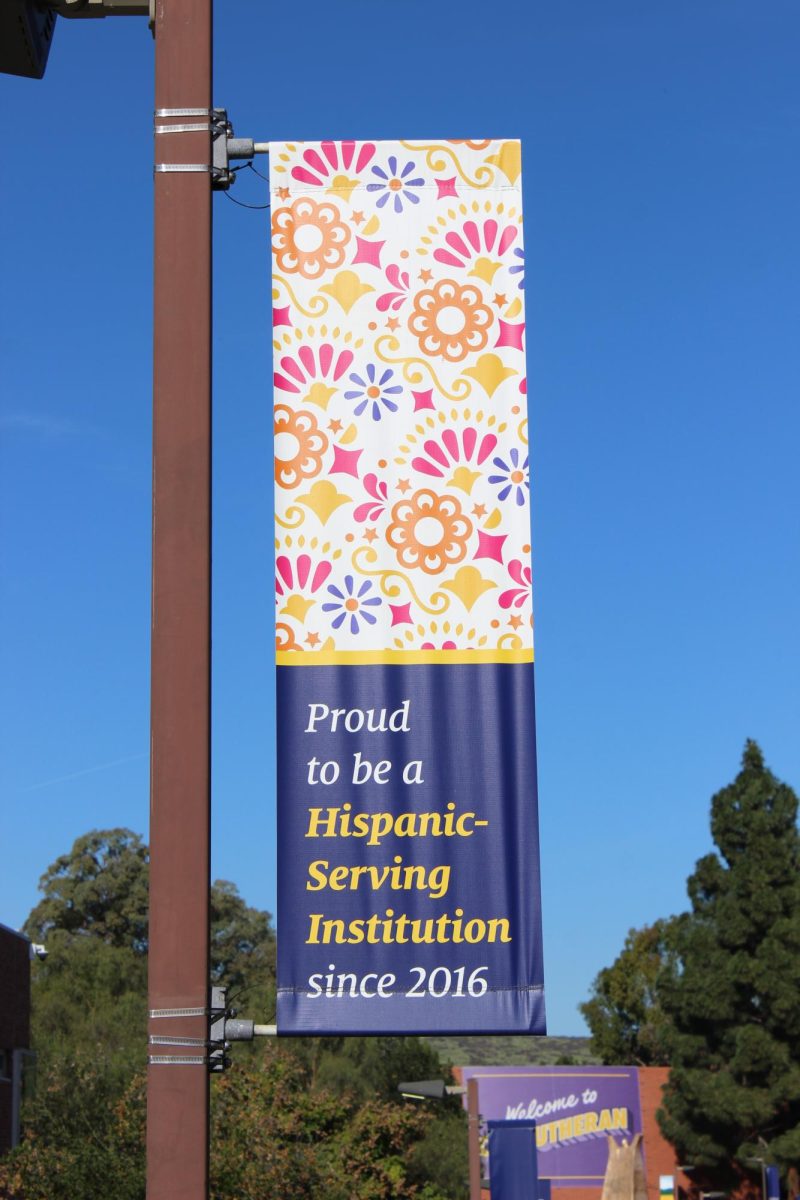
California Lutheran University has held federal Hispanic-Serving Institution status since 2016, but that designation is now at risk following the U.S. Department of Education’s announcement that it is ending $350 million in HSI program funding on Sept. 10. The decision comes with support from the Trump administration and the U.S. Department of Justice, according to the Associated Press.
Project VITAL is the last standing Title V HSI grant Cal Lutheran has, according to Rebecca Campos, program director of Project VITAL. However, Campos said the university received notice that the grant is now cancelled, but are permitted to use a “12-month closeout period.” The program will end in September 2026.
“VITAL” stands for Vocational Identity and Talent in Academic Learning and serves to “expand educational opportunities by connecting purpose and vocation with the academic curriculum,” according to the Cal Lutheran website.
“In a nutshell, VITAL is helping all students at Cal Lutheran to become prepared for the job market through mentorship, internships, faculty engagement, etc.,” Campos said.
The Department of Education put out a press release citing the reasoning for the cuts, saying that HSI programs “discriminate by conferring government benefits exclusively to institutions that meet racial or ethnic quotas” and are “unconstitutional.”
According to the U.S. Department of Education’s website, the HSI division was established to award grants that help these institutions strengthen their programs, facilities and student services in order to expand educational opportunities for Hispanic students and other underrepresented groups.
For an institution to be considered an HSI, at least 25% of their full-time students must be Hispanic, according to Cal Lutheran’s website. Cal Lutheran’s percentage has risen to over 42% in 2025.
Lauren Causey, executive director of the Office of Sponsored Research and Projects, said in an email interview that Project VITAL’s grant at Cal Lutheran was valued at $2,807,976.
Causey said the cancellation was directly related to the Department of Education’s decision to discontinue seven types of Minority-Serving Institution programs.
“The Developing Hispanic-Serving Institutions program was among those that were discontinued. DHSI was the funding source of Project VITAL,” Causey said.
Lorena Muñoz, professor and chair of global studies, associate dean of Equity, Inclusion and Belonging for the Office of the President and Academic Affairs, and Chair of the Hispanic Leadership Committee, said she is disappointed by the federal government’s decision to cut HSI funding.
“The lack of value that the Department of Education and this administration has for students, and higher education period, not even Latino students, just students itself, is devastating,” Muñoz said.
According to Muñoz, Cal Lutheran and other HSIs are first granted HSI designation, which then allows them to apply for different HSI grants and be a part of various HSI social networks. These networks include the Seal of Excelencia and the Hispanic Association of Colleges and Universities.
The Seal of Excelencia is a certification granted to an institution that requires them to show intentionality and measurable results for student success. For an institution to receive this certification, they must showcase “an intentional alignment of data, evidence-based practices, and leadership, all resulting in students’ educational and economic success.” Cal Lutheran is a part of this network to one day achieve the Seal of Excelencia, Muñoz said.
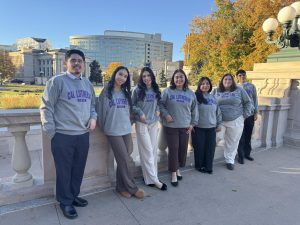
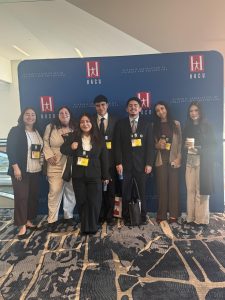
According to the HACU website, HACU is the only national educational association that represents HSIs as the “pre-eminent voice for Hispanic higher education.” They represent 615 HSI’s and 5.6 million students nationwide.
Muñoz said Cal Lutheran students and faculty have participated in multiple HACU leadership conferences, including the 40th Annual Conference from Oct. 31 to Nov. 2 this year.
Despite claims of HSI programs being “discriminating” and “unconstitutional” by the Department of Education, Muñoz said “all of these [HSI] programs are open to all students, they’re just targeting [Hispanic] students because they have been underrepresented.”
Muñoz said when the university receives infrastructure grants from HSI, all members of the institution benefit from the classrooms and technology—not just Hispanic students—and the same applies for tutoring grants. Muñoz said HSIs also bring a different type of diversity to campuses, which is “really important,” because diverse environments are “really positive for all students.”
“We are an institution that’s committed to HSI servingness no matter what. So even if tomorrow they rip away the HSI status from this institution, we will still continue to do this,” Muñoz said.
If the university’s HSI status and funding is officially taken away in the future, Jennifer Quintero, senior and co-president of the Latin American Student Organization, said LASO will continue playing a large role in representing and supporting the Hispanic community at Cal Lutheran.
Quintero said the Hispanic heritage events on campus and the university’s HSI designation were key factors in her decision to attend Cal Lutheran.
“I think because I am Mexican, it was so cool to see my own culture represented,” Quintero said. “It’s really cool, now as a senior, to be a part of the group that actually represents our culture on campus.”
Quintero said LASO’s local efforts to support the Hispanic community started in the summer with the increased activity of the Immigration and Customs Enforcement raids in Ventura County. She said the immigration raids were “very personal” as most LASO members felt impacted.
“We knew that we wanted to take a stance and be as involved as we could,” Quintero said. “We went to protests, workshops [and] city council meetings. We did all the things to simply learn about what was going on and also to make our voice heard.”
Quintero said LASO knew they wanted to continue these efforts through the school year, which started by partnering with the Center for Cultural Engagement and Inclusion for the Latine Heritage Fiesta that occurred in September.
“We brought different organizations onto campus, like 805 UndocuFund, VC Defensa, and Buen Vecino, which are all organizations that are helping to reduce the impact felt by ICE and all that going on in our communities,” Quintero said.
According to Quintero, LASO is “looking forward” to bringing more external organizations to campus again to host workshops for the community, students, faculty and staff.
“I think the only thing we can do is inform each other. I feel like we’ve already done a lot to inform ourselves. Now it’s kind of our turn to inform others on campus, because we don’t think this is going to stop anytime soon” Quintero said.
Quintero said she knows the university is doing a lot behind the scenes to make efforts to represent the Hispanic community on campus more, but said she does feel like most of these efforts are student-led and not so much by the university’s administration.
Quintero said if the university is designated as an HSI, “it shouldn’t all be dependent on a club.”
“I think, to be honest, this year will be really how we see if [administrators] really do a good job or not, especially with the federal funding being cut and all of that,” Quintero said. “I think Cal Lutheran as a whole is going to have to step up, but I think only time will tell if they actually do step up and fulfill the gaps that the government [is no longer] filling.”
President John Nunes said that while the university is “trying to find ways to make up the gap, … there are new gaps.”
“Of course, since all of our HSI resources went to student support, students are feeling it the most. We are currently exploring ways to make up the gap,” Nunes said.
Nunes said the university has added new members to the Board of Regents including César Morales, Ventura County’s superintendent of schools, which, according to Nunes, has a high Hispanic student population, in order to better understand how the university can “better serve the population” here on campus.
“We are working assiduously and diligently to try to figure out ways to be creative and to continue to provide the student support in new and nontraditional ways,” Nunes said.
Nunes said he could not disclose exactly which programs will be cut as a result of the reduction of HSI funding, but the university has received direct notices about a few.
“I want to say this: unequivocally, without any hesitation or contingency, we are not moving away from our commitments to diversity, equity and belonging,” Nunes said.


![“We heard [the students], and we’re going to try to offer something that still has their favorites, but also introduce something new at a point where people feel like they’re willing to pay,” Elizabeth Nepute said.](https://cluecho.com/wp-content/uploads/2026/04/IMG_9502-1200x800.jpg)