
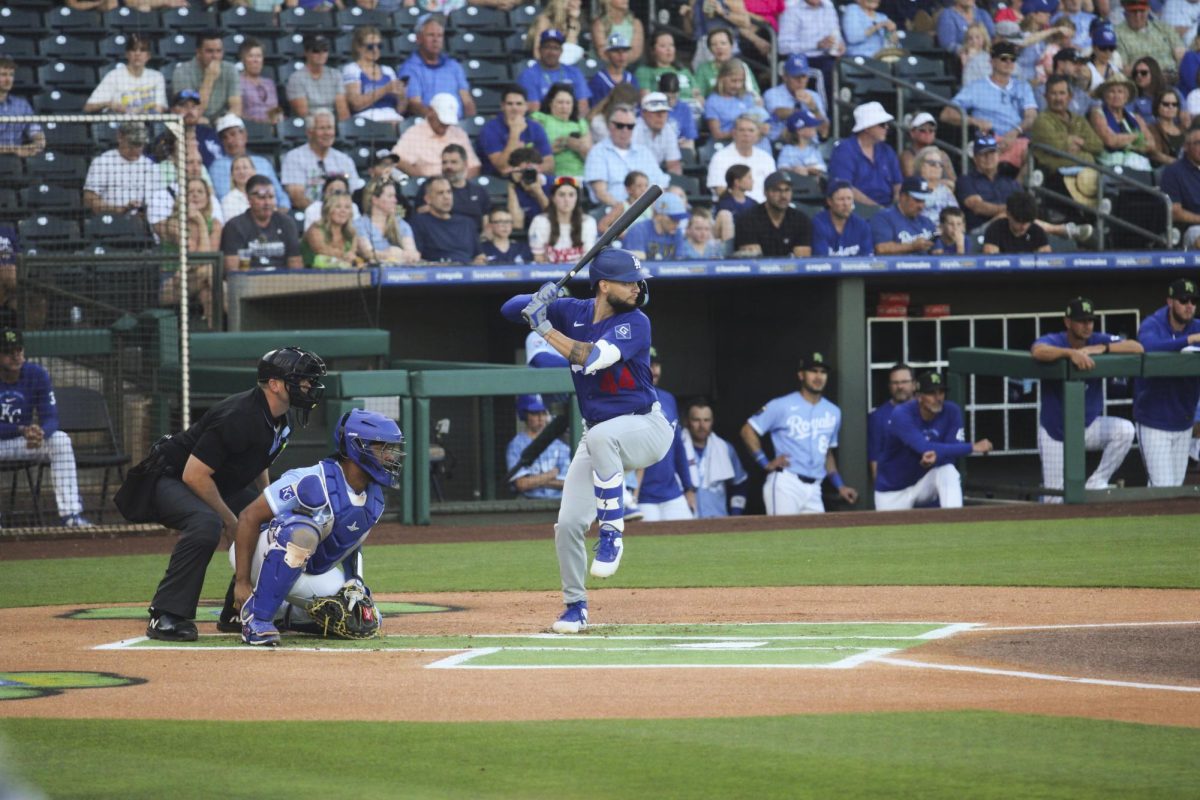
Spring training is not just a warmup for Major League Baseball teams, it is the closest thing the sport has to its purest form.
As a lifelong baseball fanatic and past Bownet and Eastern-sponsored athlete, I believe spring training provides a better overall experience for fans over regular season games, the World Baseball Classic, or even playoff baseball.
At Camelback Ranch, the shared home of the Los Angeles Dodgers and the Chicago White Sox in Glendale, Arizona, the heightened connection between athletes and fans can be felt immediately. Games do not feel like something you are attending, but rather something in which you are involved in.
“You get to watch players practice, coaches practice, there’s just more chance for them to meet you,” California Lutheran University junior pitcher Oscar Lopez said.
One of the most common criticisms of spring training is that the games “do not matter” since they do not count toward regular season standings. However, spring training is when teams evaluate their athletes, build their rosters and make decisions for the strongest lineup for opening day.
While these games are not on an organization’s record, they help shape the upcoming season, meaning you are actively watching a team get built.
The Arizona Cactus League is comprised of 15 different teams. All the squads in Arizona are located within a 50-mile radius. This creates flexibility for fans to watch multiple teams in the span of a day, which is nearly impossible during the regular season.
Dan Jones, a field management worker at Camelback Ranch, said the immersive experience between future and current baseball stars adds to the overall fan experience.
“You get a chance to see the minor leaguers and the majors. The majors are, of course, crowded, but you can always come over to a minor league game and enjoy that for the day,” Jones said.
This level of player-fan interaction is not found during the regular season, unless, of course, you pay four-to-five figures a ticket for an exclusive experience. During spring training, all a visitor needs is a ticket, as parking is free, according to Camelback Ranch’s information and policies.
According to StubHub, spring training tickets cost 30%-70% less than regular season MLB games. For a team like the Dodgers, opening day tickets in the nosebleeds were $162 on StubHub with $45 parking as of March 23. Eliminating those fees makes a huge difference, especially if attending with a group.
“You’re already spending more than $100 just on the ticket and the parking itself,” Lopez said.
Spring training also includes the Grapefruit League in Florida, where all 30 MLB teams, like the New York Yankees at George M. Steinbrenner Field and the New York Mets at Clover Park, prepare for the season in exhibition games.
“It’s a festive type environment where our goal is to make it fan-friendly, and to enjoy your time while you’re at the facilities,” Jones said.
According to MLB attendance trends, postseason games are bringing in more than 45,000 fans, sometimes pushing towards 50,000. In contrast, most stadiums in the Cactus League hold between 8,000 and 13,000 people.
That’s not just a smaller crowd, it is a completely different atmosphere. This reality becomes even clearer when fans step away from the main stadiums.
During my visit to Camelback Ranch, I was able to walk the backfields in the morning and watch top prospects play in an environment where the game was stripped down to the essentials. The athletes seem like normal people, working on ground balls, basic backhand drills, hitting balls off tees, or just playing catch in a patch of grass.
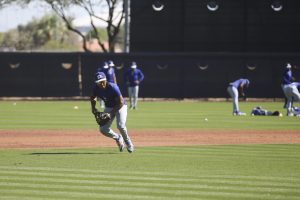
(Kyle Otting)
Josue De Paula, ranked the 15th best prospect in all of baseball, is viewed as one of the top young bats in the Dodgers organization due to his rare combination of size, plate discipline and emerging power at just 20 years old. He is viewed as a major piece in the organization’s future.
During my visit, I was able to walk alongside him as we talked about the fundamentals of the game and how he plans on making the Dodgers’ superstar-filled roster.
I also spoke with prospects like Mike Sirota, James Tibbs III, and Christian Olivera while they were going through their training routines. These were not formal interviews or scheduled media sessions. They were real conversations happening in between reps, as these players moved from drill to drill, preparing for games.
This is what spring training represents—the chance to be immersed in baseball in a way that the regular season just does not allow. You are not watching from afar. You are in the middle of player development, able to interact with players who are trying to make a name for themselves or those who have already become superstars.
The same focus on development was seen in the Camelback backfields, where multiple prospect games were taking place. Dodgers and White Sox prospects were competing on one field, the Blaze, a team from the British Columbia Premier Baseball League, and the Dodgers were competing, and across the way, the White Sox and Rangers were playing.
Coaches stood among the fences watching closely and evaluating their players. There was no spectacle, just pure talent on a field in its most developmental phase. It’s these moments, watching athletes move around from field to field while the White Sox developmental coach stands beside you evaluating the prospects, that make you realize how special spring training truly is.


