Editor’s Note: This article has been translated into Spanish by El Eco Copy Editor Danessi Valiente. You can find the Spanish version here.
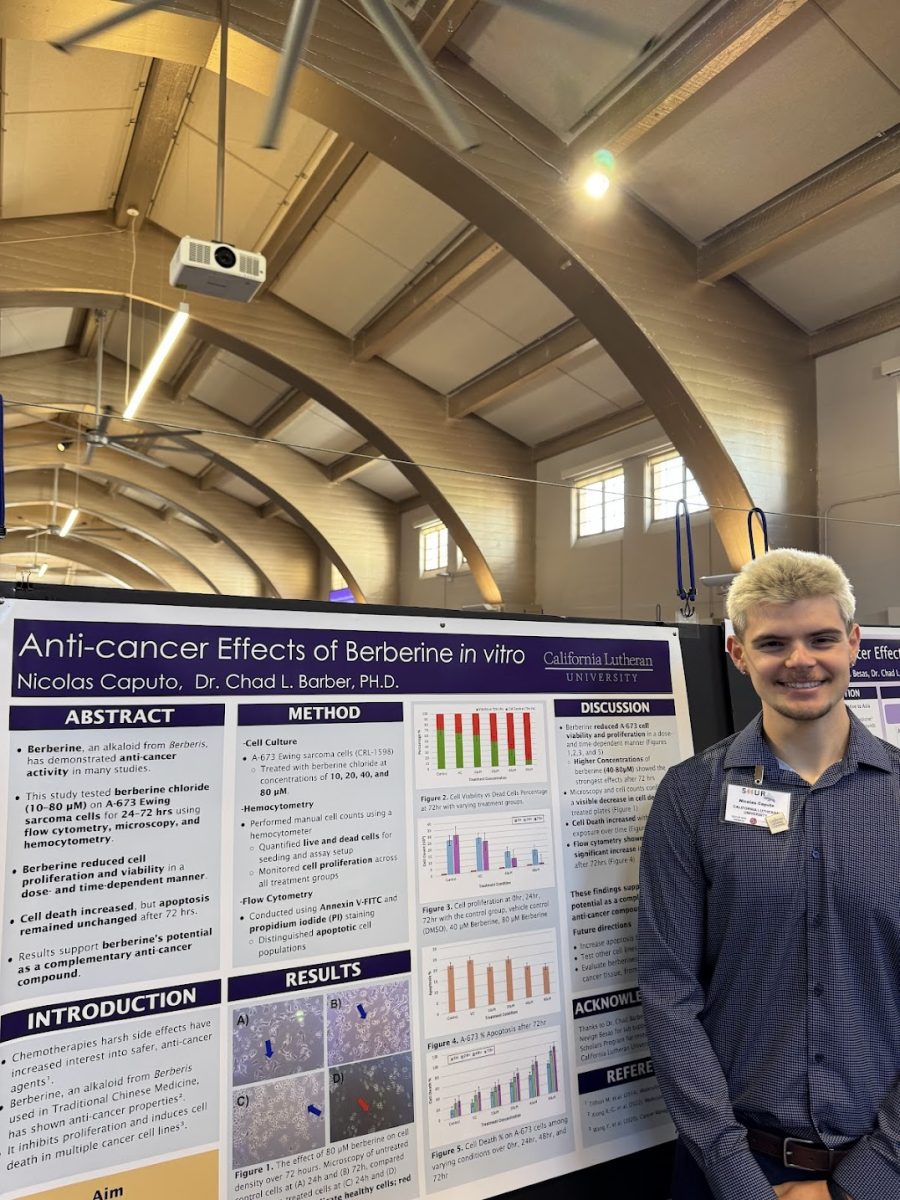
Nicolas Caputo, a junior at California Lutheran University, is a McNair Scholar researching anti-cancer compounds and founder of CLU Against Cancer, a club affiliated with the American Cancer Society that launched in fall 2025.
Caputo, a biology major with a public health minor, has been conducting research since his first year at Cal Lutheran. As a Latino in STEM, he said representation in these fields is important to him.
“What really sparked my interest in medicine and research is just, to me, like, the ability to learn more about yourself and other people. I think it’s helpful to be able to know what’s going on in your own health and the health of others,” Caputo said.
Before focusing on the anti-cancer herbal compounds, Caputo spent his first year studying birds, specifically white-crowned sparrows, with Gabrielle Names, a former biology professor at Cal Lutheran.
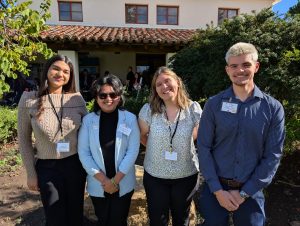
“I took a one-week trip up to Tioga, California, kind of by Mammoth [and] Yosemite and spent the week camping and … doing some research with birds, getting their measurements and taking some blood samples,” Caputo said. “My last sophomore year, [Names] changed schools, so I had to look for a new research … professor to go with.”
Names referred Caputo to his current mentor, Chad L. Barber, a professor in the Biology Department, who has a lab focused on cancer cell biology and immunology. There, Caputo said he learned more about berberine and became interested in studying the compound in the McNair Scholars program.
Caputo said berberine is found in plants and is accessible at stores like Costco and Amazon. It is known for its anti-inflammatory properties and ability to help with insulin sensitivity, he said.
“Researchers are currently looking at these kinds of compounds, or herbal compounds, to help aid chemotherapies. If you have a herbal compound that’s not going to harm you, you could potentially lower the amount of chemotherapy,” Caputo said. “That allows you to … have a better outcome as a patient and have a better livelihood after therapy.”
Caputo said he has benefited from the McNair Scholars program and the resources they offer, such as the chance to network with like-minded students. The program offers various resources that consist of workshops, conferences and faculty guidance for their research, according to its webpage.
“Being a Latino, Hispanic person in science, you know, there’s things outside of school that I might have to face that might make doing research hard,” Caputo said. “That’s why I value the McNair [Scholars] program so much, was because they paid for on-campus, like, housing during the summer.”
Monica Madrigal, director of Student Support Services and the McNair Scholars Program, said she works with students, including Caputo, to provide academic and personal support throughout the research process. Madrigal said Caputo consistently checks-in with her as a member of both SSS and the McNair Scholars program.
“He always keeps me updated on things that are happening in his life in regards to research, McNair, SSS and stuff,” Madrigal said. “I just think about his growth in the program and his growth since the first time I met him to where he is today and just like the work that he will be doing, you know, in the coming months and in the next year to prepare for his future plans of grad school.”
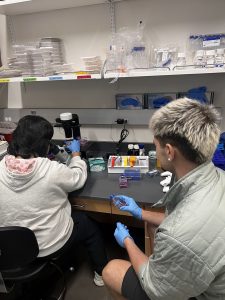
Nevign Besas, a junior biochemistry major in the McNair Scholars program, was Caputo’s lab partner. Besas said they first met after Barber assigned the pair to clean an incubator.
“We were scrubbing it down, washing it a bunch of times, and I think that really helped us bond a lot,” Besas said. “We started talking about our majors, interests, things like that, and we got along pretty well from the start.”
Besas, a first-generation immigrant, said the McNair Scholars program has provided opportunities to connect with students and faculty. During their time doing research together, Besas said Caputo makes a strong lab partner.
“I think he’s a really good listener,” Besas said. “He’s always there to give you feedback, but when he needs it, he’s also really good at taking it.”
Aside from his research, Caputo founded CLU Against Cancer, a club that was approved in December 2025.
Caputo said his desire to start the club came from two experiences. During his sophomore year, he volunteered with the Pediatric Brain Tumor Foundation and helped organize a motorcycle ride fundraiser.
“I helped out and we raised a lot of money and got to see some patients that were in the Pediatric Brain Tumor Foundation,” Caputo said. “It left you feeling really good, you know, helping others.”
His family’s experiences with cancer also led to the club’s development, according to Caputo.
“My mom and my grandma were affected by cancer in their life. Luckily they’re, you know, past therapy and they’re doing well,” Caputo said. “[Cancer’s] ability to affect anyone and led me to, you know, wanting to start a club to help just anyone facing cancer.”
Caputo said he hopes to gather a larger student presence for future club events, including increasing participation in Relay For Life, an annual fundraiser for the American Cancer Society that is hosted at Cal Lutheran.
This month, the club has co-hosted a blood drive and a hike to the Cal Lutheran cross for National Cancer Prevention Month, which occurs every February.
“We’re looking at ways how we could prevent cancer, and incorporate it into an event,” Caputo said. “A really good way to prevent cancer, which is proven, is through exercise.”
Caputo said he plans to continue his research with Barber once he returns from sabbatical. He said his work provides a foundation for graduate school and his future career in medicine.
“The opportunity to do research has been really profound. It honestly changed the way I think,” Caputo said.